
Romania - five naval drones destroyed in Black Sea, July 2026
Romanian forces detected and destroyed five Ukrainian naval drones in the Black Sea between May and July 2026, acting Defence Minister Radu Miruță disclosed on July 11, 2026.
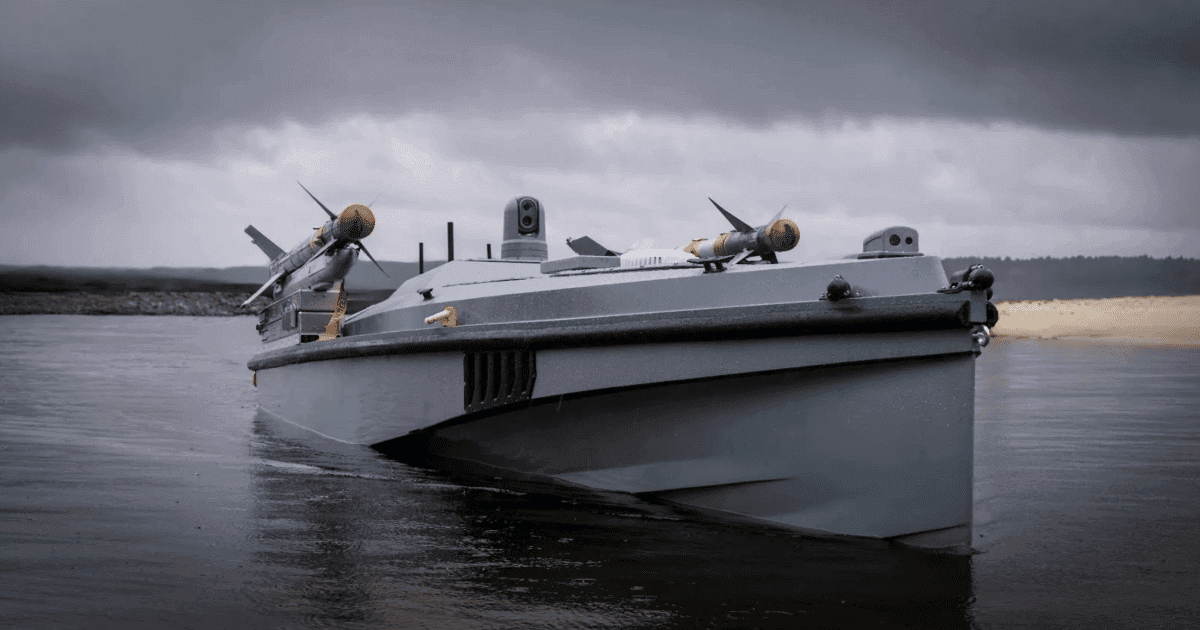
Romania's acting Defence Minister Radu Miruță disclosed on July 11, 2026 that Romanian forces had detected and destroyed five Ukrainian naval drones in the Black Sea. Four of the five were dealt with before a Ukrainian Magura V5 unmanned surface vessel detonated at Constanta port on June 5, 2026; one was destroyed after. Some of the recovered drones carried explosive payloads; others did not. This reconstruction is based on reporting by Kyiv Post, Ukrainska Pravda, APA.az, and Marine Insight, and AirVeto's wind-model data for the Romanian Black Sea region.
Romania disclosed five naval drone destructions that were not announced as they occurred
Miruță's statement revealed that Romanian forces had been conducting maritime neutralisation operations without public disclosure. No individual dates or coordinates for the five incidents were included in the official statement. Drone debris was recovered from the sea after each destruction; Miruță confirmed some had explosive charges, others did not.
At least one of the drones was a Sea Baby, a Ukrainian Security Service (SBU) unmanned surface vessel built for strikes against Russian Black Sea Fleet assets. When those operations lose navigation control, the vessels drift into NATO maritime space. The same mechanism explains the 5 June incident: Ukraine's Navy attributed the loss of control of that Magura V5 to Russian electronic warfare jamming.
Four of the five incidents preceded the Constanta port explosion on June 5, 2026
The June 5, 2026 Constanta explosion is the reference point in Miruță's statement. On that date, a Ukrainian Magura V5 drifted into Romania's main Black Sea port after losing guidance under Russian EW interference, lodged in an anti-pollution barrier near berths 77–78, and self-detonated. Romania evacuated over 1,300 people from nearby beaches; no injuries were recorded. That incident is documented at Constanta port, June 5, 2026.
The July 11 disclosure establishes that the Constanta explosion was not an isolated event but the most publicly visible failure in a pattern of Ukrainian naval drones losing control in or near Romanian territorial waters. Four comparable incidents were dealt with before 5 June; one occurred after.
Romania demanded that Ukraine reprogram naval drones to self-destruct before reaching NATO waters
Following the Constanta explosion, Romania formally pressed Ukraine to reprogram its Black Sea naval drones to self-destruct before entering NATO maritime space rather than continuing toward shore. Romania's Ministry of National Defence also signalled it intends to develop its own unmanned maritime vessels for Black Sea border surveillance: a capability that would allow Romania to detect drifting drones earlier and at greater distance from the coast.
The five-incident pattern is consistent with a wider Black Sea spillover geography. A Russian aerial drone struck a Galati apartment building on May 29, 2026, one week before the Constanta port detonation, and Romania is now the most frequently affected NATO member state from Black Sea conflict spillover in the 2026 period. Days before Miruță's disclosure, a separate radar detection near Snake Island had already triggered a RO-Alert for northern Tulcea County on 7 July, documented in Tulcea drone alert, July 7, 2026.
This reconstruction draws on reporting by Kyiv Post, Ukrainska Pravda, and Marine Insight, and on AirVeto's wind-model data for the July 2026 Black Sea event period. The wind layer shows atmospheric conditions over the Romanian Black Sea for the disclosure window. Methodology: methodology page.
Related location
- Romania - Romania, a NATO member since 2004, shares a Danube-river border with Ukraine at the Black Sea delta and has repeatedly recorded drone debris, intercepts, and naval-drone incidents along that frontier and its Black Sea coast since September 2025.
Sources
- Kyiv Post - Romania Destroys Five Naval Drones in Black Sea (11 Jul 2026)
- Ukrainska Pravda - Romania says it destroyed five sea drones in Black Sea (11 Jul 2026)
- APA.az - Romania says five sea drones neutralized in Black Sea (11 Jul 2026)
- Marine Insight - Romania destroys Sea Baby maritime drone in Black Sea (11 Jul 2026)
- Charter'97 - Romania announced five maritime drones destroyed in the Black Sea (11 Jul 2026)
- Methodology
Last updated: