
Drone enters Romanian airspace near Sfântu Gheorghe, Tulcea
A Russian Shahed/Geran-type strike drone entered Romanian airspace near Sfântu Gheorghe, Danube Delta, on February 25, 2026, and exited over the Black Sea near Sulina without dropping debris on land.
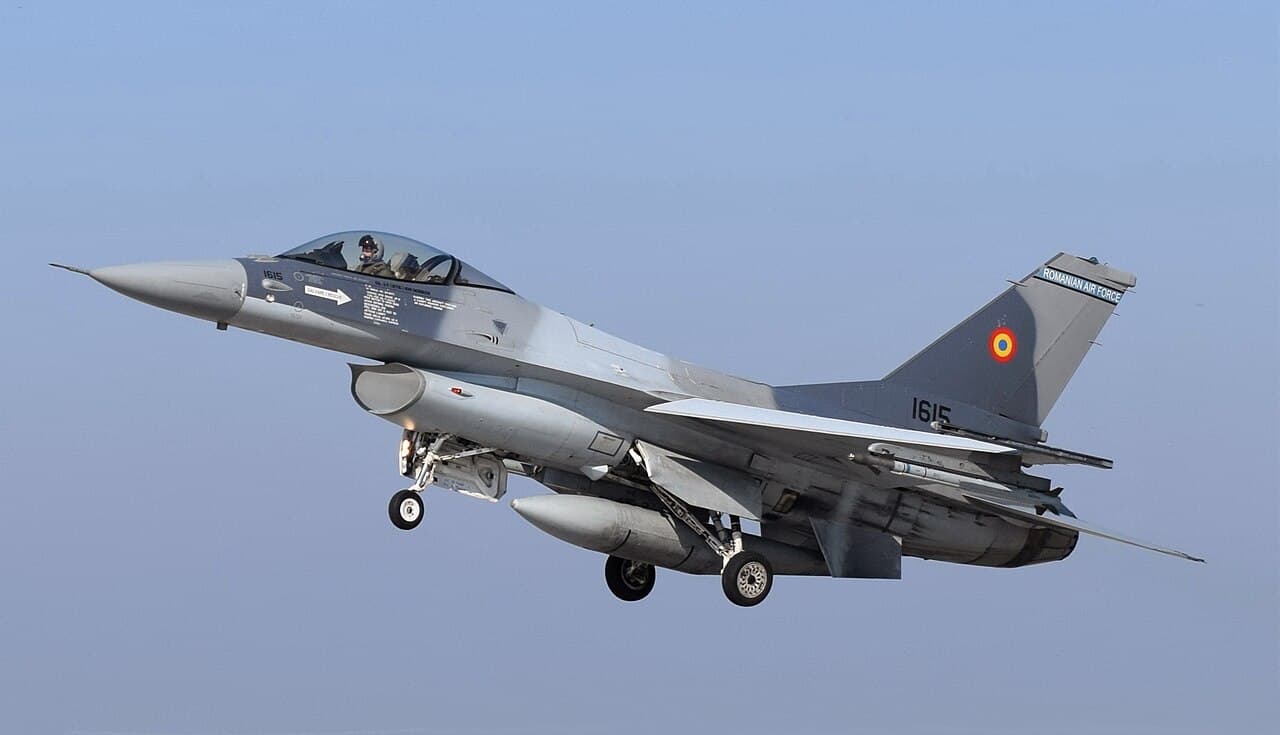
At approximately 17:50 local CEST (15:50 UTC) on Wednesday, February 25, 2026, a Russian Shahed/Geran-type strike drone entered Romanian airspace near Sfântu Gheorghe at the mouth of the Danube Delta in northern Tulcea County. The drone crossed Romanian airspace and exited over Black Sea territorial waters near Sulina without releasing debris on Romanian land. Two Romanian F-16 Fighting Falcons scrambled from Fetești Air Base at the same moment the incursion was detected. No injuries and no infrastructure damage were recorded.
AirVeto's wind-model data for the event window: At 15:00 UTC on 25 February - at the start of the transit window - the 1,000 m layer over the Danube delta showed NW wind at 37.7 km/h.
How the Romanian Air Force responded
Romanian Air Force Base 86 "Locotenent aviator Gheorghe Mociorniță" at Fetești scrambled two F-16AM Fighting Falcons at 17:50 local CEST (15:50 UTC) upon detection of the drone crossing into national airspace. Romania's Ministry of National Defence issued a public statement confirming the incursion and the scramble response. A RO-ALERT cell-broadcast warning went out to residents in the affected area of Tulcea County at 18:07 local CEST (16:07 UTC), approximately 17 minutes after the drone entered Romanian airspace. The alert was lifted at approximately 18:45 local CEST (16:45 UTC) after the drone exited into Black Sea territorial waters and posed no further risk to populated areas.
The drone did not linger over Romanian territory. Its route from the Sfântu Gheorghe entry point to the Black Sea exit near Sulina followed the natural geography of the delta's northern arm, and the F-16s tracked it throughout without engaging. This was consistent with Romanian rules of engagement in low-density, low-populated overflight zones. Romania's defence ministry confirmed no debris fell on Romanian land and no ground units were deployed for recovery operations.
Why a Russian drone entered Romanian airspace
The February 2026 incursion took place during a Russian overnight strike targeting Ukrainian Danube port infrastructure, principally the ports of Reni and Izmail in Odesa Oblast. These ports sit directly across the Danube from Romania and have been a persistent target of Russian Shahed and Geran-2 strikes since 2022, as Russia sought to cut Ukraine's grain and logistics exports through the river network. Drones launched against Reni and Izmail sometimes go off course or are damaged mid-flight and continue on their last-known heading rather than returning to their programmed target.
Sfântu Gheorghe sits at the southernmost distributary of the Danube Delta, placing it less than 10 km from Ukrainian territory across the delta waterways. A drone losing guidance during a strike on Reni would cross Romanian airspace almost immediately after leaving Ukrainian territory at this latitude. The drone that entered on 25 February exited near Sulina, the settlement at the mouth of the Sulina arm of the delta, confirming it tracked broadly east-northeast across the delta rather than turning back toward Ukraine.
Part of a pattern along the Danube border
The February 2026 incident at Sfântu Gheorghe was one of the earlier documented violations in a series that Romania's defence ministry later tallied at seven airspace violations in 2026 alone up to 28 April, and 28 total since 2022. The Danube border zone from Tulcea County through Galați County saw repeated incursions in the weeks and months that followed.
On March 26, 2026, drone debris was recovered near Parcheș, Tulcea County, the first instance of a Russian drone leaving wreckage on Romanian soil in that sequence. The Galați Bariera Traian incident on April 25, 2026 brought a drone over populated urban areas in Galați for the first time. The series reached its most severe point on May 29, 2026, when a Geran-2 struck a 10-storey apartment block on Bulevardul Brăilei in Galați, injuring two residents in the first confirmed case of a Russian drone wounding civilians on NATO territory. Romania's defence ministry confirmed that the May 29 Galați strike was the 28th airspace violation since 2022.
Wind conditions over the Danube delta
At 15:00 UTC on 25 February - at the start of the transit window - the 1,000 m layer over the Danube delta showed NW wind at 37.7 km/h. Moderate flow pushing SE at this level was the atmospheric background for the crossing. For full methodology see methodology.
The reconstruction above is based on reporting by Romania Insider, Ukrainska Pravda, ACTMedia, and AirLive, and on AirVeto's wind-model data for the 15:50–17:00 UTC window on February 25, 2026.
Methodology: see methodology. Page published 2026-06-03 by AirVeto.
Related location
- Romania - Romania, a NATO member since 2004, shares a Danube-river border with Ukraine at the Black Sea delta and has repeatedly recorded drone debris, intercepts, and naval-drone incidents along that frontier and its Black Sea coast since September 2025.
Sources
- Romania Insider - Russian drone enters Romania's airspace again (February 2026)
- Ukrainska Pravda - Russian attacks on Ukrainian Danube ports: drone entered Romanian airspace (February 26, 2026)
- ACTMedia - Russian attacks on Ukrainian Danube ports: drone entered national airspace near Sfântu Gheorghe (February 26, 2026)
- AirLive - Romanian Air Force scrambled fighter jets after Russian drone breached airspace (February 26, 2026)
- Methodology
Last updated: