
Four contraband drones intercepted at Druskininkai in one night
Lithuanian border guards landing four smuggling drones at once carrying 5,000+ packs of Belarusian cigarettes - the largest simultaneous drone interception in VSAT operational history.
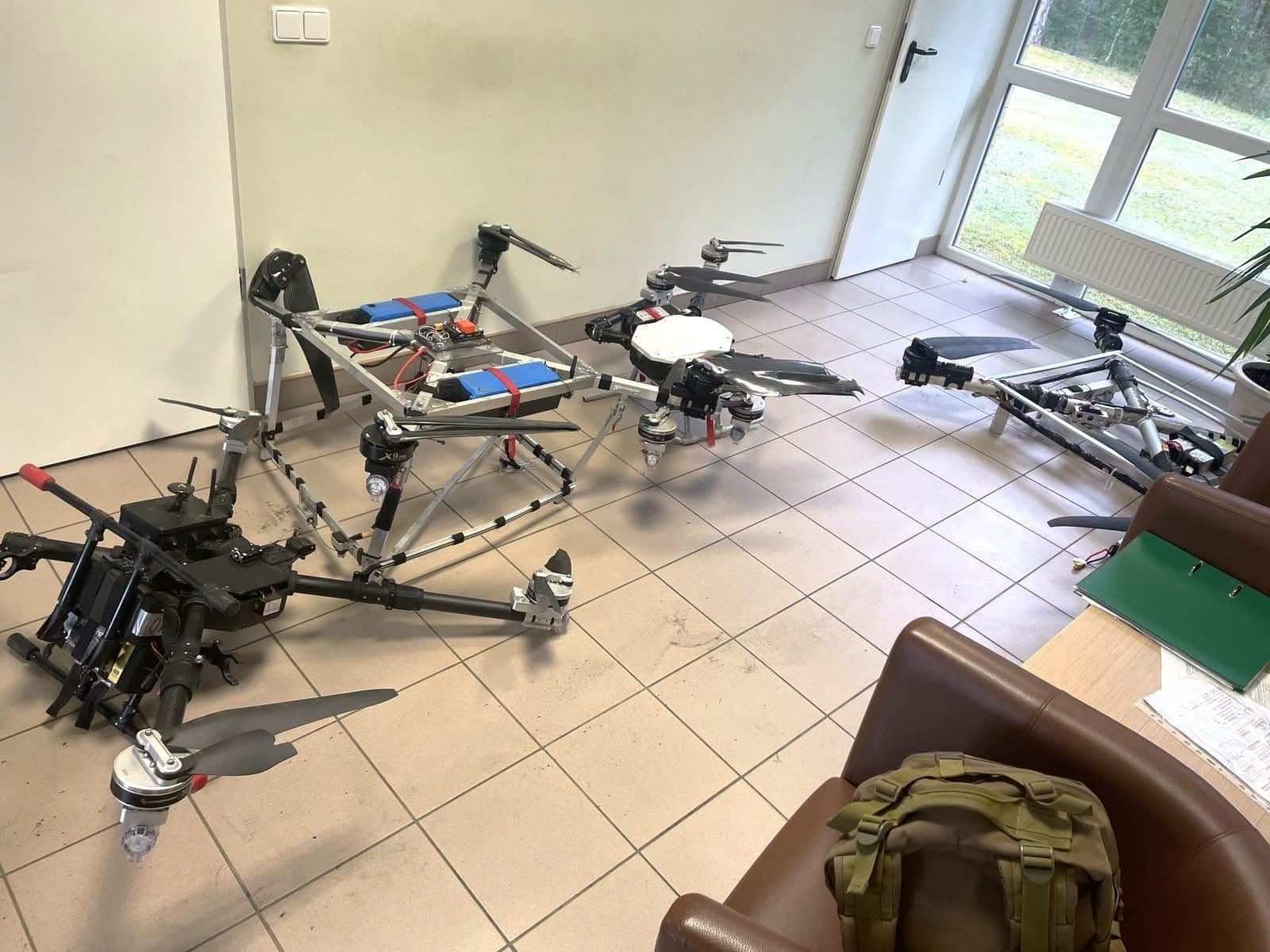
On the night of July 7, 2026, Lithuanian border guards at Druskininkai made operational history by intercepting four contraband drones in a single operation - the first time in VSAT's operational record that four drones were landed simultaneously at one location. The drones carried tobacco cargo totalling 4,998 packs of Belarusian cigarettes with an estimated value of over €27,500 after Lithuanian tax assessment.
The four drones were intercepted approximately 1 kilometer from the Lithuania-Belarus border in the Jaskoniai village area, part of the Druskininkai municipality in Varėna district. This represents an operational escalation: prior to July 7, 2026, individual drone interdictions were the norm; landing four functioning devices with intact payloads in a single action was unprecedented in the VSAT archive.
The interception
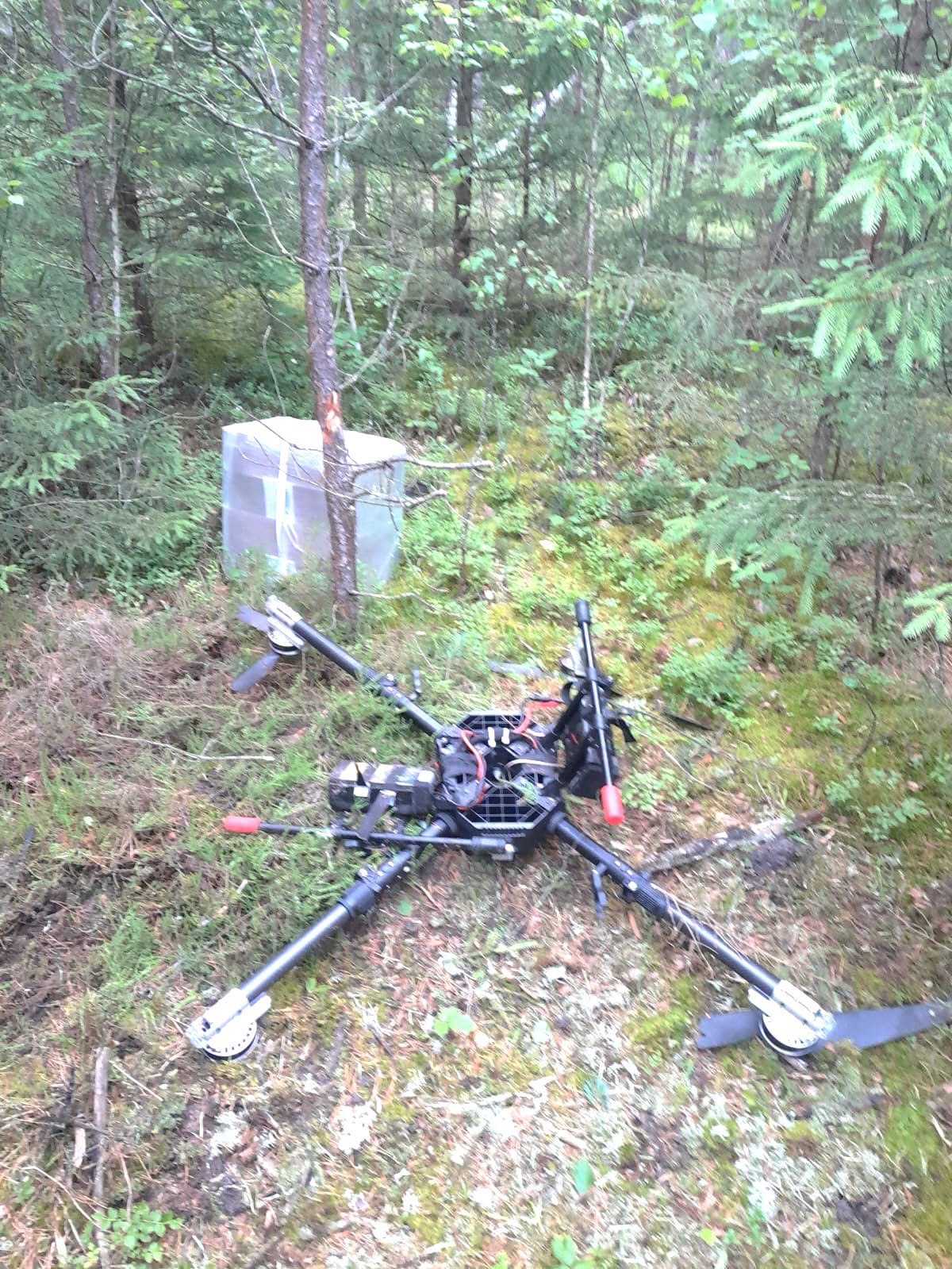
At night on 7 July, officers at the Druskininkai outpost heard acoustic signatures consistent with multiple unmanned aircraft in flight. Within moments, technical detection equipment confirmed objects inbound from Belarusian territory. VSAT officers immediately deployed anti-drone systems from multiple positions across the dark terrain. All four drones were brought down sequentially; teams then swept the wooded area both in darkness and after daylight to locate and recover each device and its cargo.
The cargo
The four drones carried 4,998 packs of Belarusian cigarettes in three brands: "Queen Mentol," "NZ Gold," and "Minsk 5 Superslims," all bearing Belarusian excise tax stamps. Under full Lithuanian tax obligation, the seized cargo's declared value exceeds €27,500. The cigarettes were intended for illegal redistribution within Lithuania - the smuggling route and scale typical of organized cross-border tobacco trafficking exploiting the Belarus-EU border zone.

Operational context and scale
The 7 July interception closes out a sharp operational year for VSAT contraband drone interdiction. Over the first six months of 2026, border guards had landed 29 contraband drones carrying tobacco. This compares to 59 such interceptions across all of 2025 and 54 in 2024 - a year-on-year increase in attempt frequency despite increasingly effective interception.
Four drones in a single location on the same night represents a marked shift in smuggler operational tactics. Prior interceptions were scattered: individual or paired drones at different times and locations across the southern Lithuanian border. The 7 July cluster - four functioning devices landing nearly simultaneously - suggests either:
- An attempt to overwhelm local anti-drone capacity through saturation
- A single organized group operating multiple aircraft in parallel
- Higher-confidence smuggler coordination following prior successful routes
VSAT officials noted in their operational summary that this was the first such case in their records: "This was the first such case in VSAT activity when so many drones were intercepted in one place at one time."
Prosecution and investigation
A pre-trial criminal investigation was initiated under Kaunas District Prosecutor's Office direction, charged to the 2nd Criminal Prosecution Department. The investigation addresses illegal customs duty violations - specifically the unlawful disposal of goods subject to excise tax. All four drones and the seized tobacco are held as evidence at the Druskininkai outpost.
The scale and coordination of the 7 July attempt, combined with six-month interception data, suggests that organized tobacco smuggling across the Belarus-Lithuania border has become a resource-intensive anti-trafficking problem for VSAT and will likely remain a priority focus through the second half of 2026. This reconstruction is based on VSAT's operational record of July 7, 2026 and on AirVeto's wind-model data for the overnight event window.
The archive of smuggling-related incidents across the Baltic border is indexed at incident archive. Full Lithuanian drone and airspace-alert incidents are collected at Dronai Lietuvoje (in Lithuanian).
Related location
- Suwałki Gap - The 65 km land strip linking Poland to Lithuania - and the EU's only land connection to the Baltic states.
Sources
- VSAT - Druskininkų pasieniečiai vienu kartu nutupdė keturis iš Baltarusijos įskridusius dronus (July 7, 2026)
- LRT - VSAT: Druskininkų pasieniečiai nutupdė keturis iš Baltarusijos įskridusius dronus (July 7, 2026)
- 15min.lt - Pasieniečiai vienu kartu nutupdė keturis dronus iš Baltarusijos, rasti 5 tūkst. pakelių cigarečių (July 7, 2026)
- Methodology