
CIA reportedly warns of a Russian ship-launched drone attack on Spain, France or Italy
US intelligence reportedly warned Spain, France and Italy of a possible ship-launched Gerbera drone attack; Italy disputes the report.
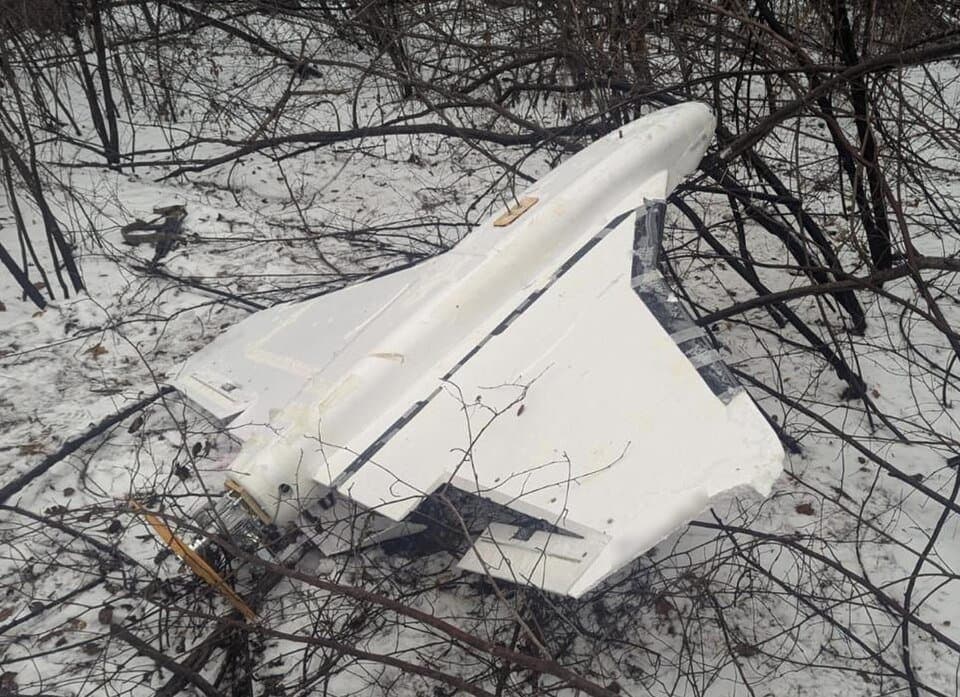
A Gerbera drone washed ashore at Rusinowo, Poland, on 14 September, 258 km in a straight line from Kaliningrad, by AirVeto's measurement. El Mundo's 23 September report of a possible Russian ship launch against Spain, France or Italy names the same drone model, with a declared range of 600 km.
Italy's government denies receiving any such warning, and no official source has confirmed the report.
El Mundo reports a plan to launch Gerbera drones from a merchant ship 200 to 300 km offshore
Journalist Xavier Colás, a former Russia correspondent, sourced the report to an anonymous person close to Lithuania's Ministry of Defence, Euronews reported. Euronews says El Mundo traces the alert to CIA director John Ratcliffe's visit to Moscow on 25 August.
The scenario: Gerbera drones hidden in a shipping container aboard an ordinary commercial vessel, launched from 200 to 300 km off the coast. El Mundo says the Gerbera reaches about 160 km/h, which makes the flight roughly an hour and a quarter to two hours.
The Gerbera is about two metres long, with a 2.5-metre wingspan, and weighs up to 18 kg. El Mundo gives its maximum declared range as 600 km, depending on the payload and on variables such as wind. The paper adds that the wingspan slightly exceeds a typical container's interior width, so the drone would travel folded, with wings removed, or set diagonally.
El Mundo describes a charge of about four to five kilograms as too small to destroy a large installation. It could start a fire, damage exposed equipment, or close an airport or port for a time. El Mundo prints a warning from EU Defence Commissioner Andrius Kubilius, translated here from Spanish: Russia "can easily launch drones over Spanish airports and damage the tourism industry."
Poland's military and El Mundo disagree on how the Rusinowo Gerbera arrived
El Mundo cites a Gerbera-2 recovered off the Polish coast as proof that the type has already flown in EU skies. It does not name the place, but the description matches Rusinowo. The paper says that drone was not a naval launch and probably came from Kaliningrad, crossing Lithuania (translated from the Spanish). It names no source for that route.
Poland's military told a different story on the day. Lt. Col. Jacek Goryszewski, spokesman for the Operational Command, said Polish systems had recorded no airspace violation since late July. In TVN24's account, he concluded the drone should be presumed to have drifted in from international waters, or from somewhere even more distant. The Rusinowo incident page holds the full account.
AirVeto measured the distances from Rusinowo's coordinates. Kaliningrad is 258 km away in a straight line (Wikidata Q1829, city centre). The Polish-Russian border north of Braniewo is 215 km away. Both sit inside the 600 km range El Mundo cites for the drone, so the distance alone does not call for a ship launch.
These are minimum straight-line figures. Neither account names a launch point, and the drone's flight path and altitude are unknown.
Italy's government has denied receiving any such warning
Italian defence minister Guido Crosetto rejected the report on 24 September. He wrote on X that the alarm "serves no one and has found no confirmation whatsoever," as The Olive Press translated the post. Euronews renders the same post as "completely unsubstantiated."
Sources contacted by the Italian news agency ANSA said no alert had reached any operational level in Italy, The Olive Press reported. Deputy Prime Minister Matteo Salvini called it irresponsible to spread a story he said had no basis. The CIA has not confirmed the report, and neither the Spanish nor the French government has publicly confirmed receiving a warning. Euronews said the Spanish defence ministry had not commented.
El Mundo's account rests mainly on the one anonymous Lithuanian source. The paper says Baltic diplomatic sources and defence analysts it consulted know of a CIA report circulating among European foreign ministries.
British analyst Keir Giles says vulnerability, not distance, sets the target
El Mundo points to politics, not geography. Spain, France and Italy all hold elections in 2027, and each has political forces that could exploit war fatigue.
Giles, a specialist in Russian military strategy, told El Mundo the target will be "wherever Europe's weakest point is." He named the United Kingdom and Spain as countries that have not invested in integrated air and missile defences suited to the threat.
NATO Secretary General Mark Rutte made a related point months ago, Euronews reported: a Russian missile would take barely ten minutes longer to reach Madrid than Warsaw. NATO replied to Euronews by quoting him: the Russian threat "exists and is a long-term one" and Europeans should "remain calm, carry on."
A ship-launched drone would not be a first
El Mundo recalls that in February a Swedish naval unit detected a drone taking off from the Russian signals-intelligence ship Zhigulevsk in the Öresund Strait. Sweden jammed it and logged the flight as an airspace violation. AirVeto reconstructed it on the Öresund drone incident page.
AirVeto has also covered the armed Russian civilian fleet in the Baltic. The Marshal Vasilevskiy brief describes heavy machine guns installed on a Gazprom LNG carrier in the Baltic.
AirVeto would measure the same three things if a Gerbera landed on a Mediterranean coast
The method is the one used at Rusinowo. Pin the recovery site, pull the wind for the event window, and measure the straight-line distance to the nearest port.
AirVeto's archive holds two recent Gerbera cases for comparison: Rusinowo, Poland and Cernița, Moldova. This reconstruction is based on reporting by El Mundo, Euronews, The Olive Press and TVN24, and on AirVeto's own distance measurements.
Sources
- El Mundo - La CIA alerta de un ataque ruso con drones contra España, Francia o Italia (23 Sep 2026)
- Euronews - What we know about CIA warning of Russian drone threat to southern Europe (24 Sep 2026)
- The Olive Press - Italy's defence minister rubbishes 'unconfirmed' report of Russian drone plot against Spain, France and Italy (25 Sep 2026)
- TVN24 - Dron w Bałtyku. Według szefa MON to wojskowy bezzałogowiec pochodzący z Rosji (14 Sep 2026)
Last updated: