
US Army Flew Dozens of Balloons at Once in the Middle East
An Army intelligence official said dozens of balloons flew at once in CENTCOM operations. AirVeto's Podlaskie data shows how far unsteered balloons travel.
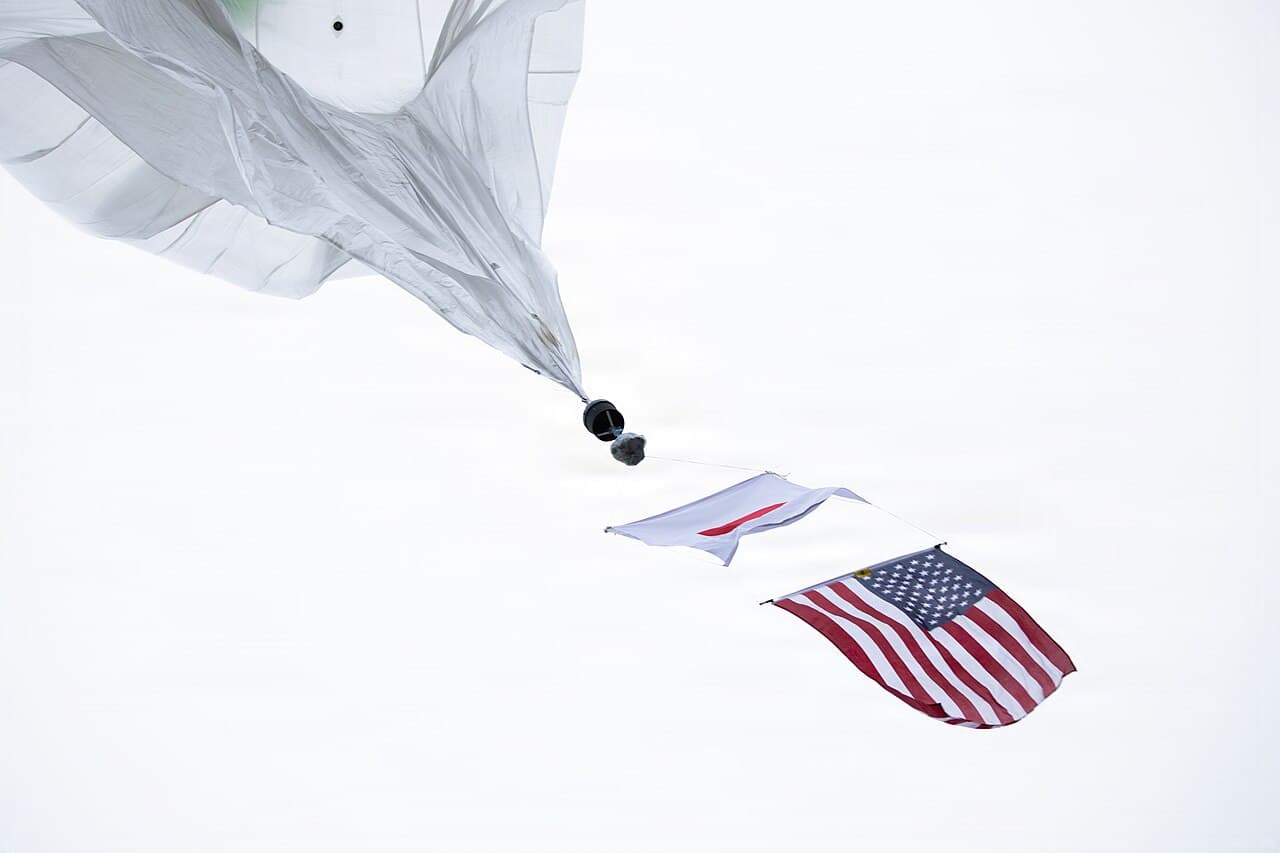
The US Army flew dozens of high-altitude balloons at once in support of US Central Command (CENTCOM) operations in the Middle East, an Army intelligence official told Breaking Defense in October 2026. AirVeto's Podlaskie reconstruction measured two unsteered smuggling balloons found 159 km from the Belarus border on the night of January 16 to 17, 2026.
The Army diverted its balloons from the Pacific to the Middle East
Andrew Evans, director of the Strategy & Transformation Office in the Army's Deputy Chief of Staff for Intelligence (G-2) shop, said the Army was asked to "pivot and do some experimentation in combination with operations." The Army supported operations in CENTCOM, he said, and the balloons "were effective for the mission that they were assigned." He could not disclose where they flew or in what scenarios.
The pivot cost the Army a planned test. In August 2025 Evans told Breaking Defense his team, working with the 3rd Multi-Domain Task Force, would likely launch more than 100 balloons over Indo-Pacific waters in 2026, in various sizes and with different payloads. Some, he said then, might act as decoys. The reason for open water, he said then, was that the team needs a "broad open area" in case environmental conditions send balloons crashing down. That test did not happen. Evans described the Middle East scale as going "from one to two to dozens simultaneously."
CENTCOM held a summit on balloons, blimps and gliders in 2022
CENTCOM held a two-day classified surveillance summit at its Tampa headquarters in October 2022, The War Zone reported. The War Zone said the command faced fewer overhead surveillance assets and no more bases in Afghanistan, and brought together more than 200 vendors, experts and officials to find long-endurance alternatives. CENTCOM spokesman Col. Joe Buccino listed "a balloon or a blimp or a kite" among the ideas, alongside solar-powered gliders.
Separately, a contracting notice in May 2026 sought 15 commercial high-altitude balloons, five each of three sizes, for delivery to Hawaii, The War Zone reported. The notice was market research only.
Logistics, operators and airspace control were the three problems
Evans named three challenges of running autonomous balloons in a theater with active operations. The first was moving them into the region and storing them: "Balloons can be a little finicky in terms of temperature," he said, and they have to contend with environmental characteristics.
The second was who flies them. Vendors helped, but the Army and joint force will need "a little bit of additional thinking" about the force structure behind the balloons. Breaking Defense reported that industry had to put the military in the "driver's seat" so that everything followed US military authorities. Evans said few people are trained to operate the balloons.
The third was airspace control. Evans did not expand on it and called it "not a new finding, [but] a consistent observation."
The Army has not decided that its next stratospheric sensor is a balloon
Evans said Army leaders are pretty certain they need stratospheric sensing, but how it will be delivered is "unclear." He listed a balloon, a solar glider and "some sort of pseudo satellite" as options and said no decision has been made.
Unsteered balloons over Podlaskie were found 159 km from the border
Poland's National Security Bureau said dozens of objects crossed from Belarus into Poland overnight on January 16-17, 2026, and Onet counted about 150 balloon violations, Radio Lublin reported, according to AirVeto's page. The Border Guard found seven sets of remains in six villages in Sokółka and Białystok counties. Farther south it found two balloons near Koroszczyn, 159 km from the Kuźnica border post by AirVeto's measurement.
AirVeto's wind data for that night shows the air from the ground to 3,000 m blowing from the south and southeast, away from the border. Only air at 4,000 m and above flowed in from Belarus. AirVeto's reconstruction treats that higher layer as the only one that could have carried balloons in from Belarus. Nobody steered them.
Lithuania's recorded nights are smaller, though they count seizures, not launches. Eight balloons crossed near Vilnius Airport on January 28, and nine cargoes were seized in four districts on October 8.
In Evans's description the Army's balloons need trained operators, and its test plan kept them over open water. The balloons AirVeto reconstructs carry cigarettes from Belarus, and the wind layer they ride decides where they land. The live map shows the current wind layers.
This brief is based on reporting by Breaking Defense and The War Zone and on AirVeto's own incident archive.
Sources
- Breaking Defense - Army sent balloon swarms to Middle East to support CENTCOM operations (Oct 2026)
- Breaking Defense - Swarming balloons: Army planning mass exercise in '26 over Indo-Pacific waters (Aug 2025)
- The War Zone - Army Wants More Sensor-Laden Surveillance Balloons Over The Pacific (28 May 2026)
- The War Zone - U.S. Central Command Eyes Solar Gliders, Blimps To Plug Surveillance Gap (10 Oct 2022)