
Malbork air alert, Sep 22 2026 - object lost from radar
Polish radar tracked an object approaching from Kaliningrad toward Malbork on September 22, 2026; the signal vanished and a two-day ground search found nothing conclusive.
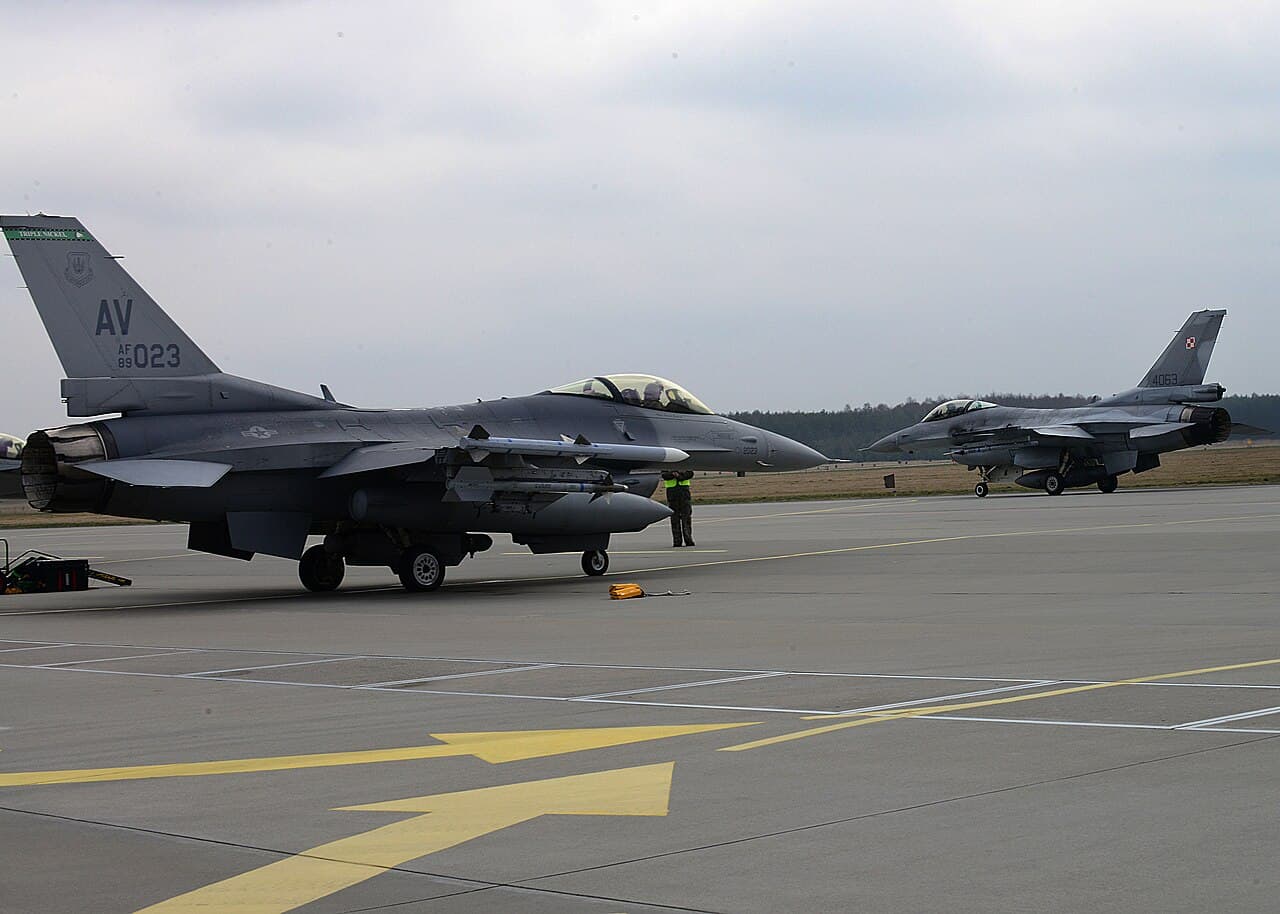
Polish military radar tracked an object approaching from Russia's Kaliningrad Oblast toward Malbork on Tuesday, September 22, 2026. The signal disappeared near the village of Żuławka Sztumska, close to the 22nd Tactical Air Base. AirVeto's archive counts this as the 14th airspace incident it has reconstructed involving Poland in 2026, one day before the September 23 Braniewo helicopter crossing.
Fighter jets could not identify the object before ground teams took over
Poland's Operational Command of the Armed Forces sent fighter jets to visually identify the contact, but the pilots found nothing at the last known position, spokesman Lieutenant Colonel Jacek Goryszewski told reporters. Aerial identification failed, so ground teams took over. Soldiers from the Territorial Defence Force, police and the fire department searched the area where the radar signal had disappeared, backed by a helicopter, to rule out the possibility that something had come down. Asked by local outlet Nasze Miasto Malbork whether an object had fallen, Goryszewski said: "To za dużo powiedziane" (that's saying too much).
Goryszewski told Dziennik.pl the object "moved in accordance with wind direction and speed," which is why officials floated a flock of birds or a weather balloon as more likely explanations than a drone or missile. Operational Command did not classify the contact as a threat, citing its speed and heading.
The search ran through a second day with no object recovered
Searches resumed Wednesday and continued into Thursday, September 24, without a confirmed find, according to local reporting from the Malbork area. No village or property damage has been reported. Operational Command has not said whether it expects to close the search without an identification.
A strong, steady north wind was blowing that day
Polish authorities gave only the date for this contact, not a time. The figures below are AirVeto's model evaluated at 19:00 local time on September 22, a reference point within that day rather than the moment the signal was lost.
At 1,000 m the wind came from the N at 45.3 km/h. At 2,000 m it also came from the N, at 46.3 km/h. At 3,000 m it came from the N at 47.9 km/h.
A wind that strong and that uniform from due north would carry a drifting object south, from the Kaliningrad direction toward Żuławka Sztumska. That is the same path Goryszewski described when he raised a weather balloon or a bird flock as more likely than a powered aircraft. AirVeto's data cannot confirm what the object was, only that the wind that day matched the drift officials described.
This reconstruction is based on reporting by Defence24, Rzeczpospolita, Dorzeczy and local Malbork outlets, and on AirVeto's wind-model data for September 22.
A second Kaliningrad-frontier event in two days
The Żuławka Sztumska contact came one day before a Russian Mi-8 helicopter crossed briefly into Polish airspace near Braniewo, also from the direction of Kaliningrad. Poland's Operational Command described the Braniewo crossing as a test of Polish air defenses; it has not offered a similar assessment of the Żuławka Sztumska contact, which it has not classified as a threat.
Unlike the Braniewo crossing, nobody has said what caused the Malbork radar contact, or whether anything reached the ground. AirVeto will update this page if Polish authorities confirm an identification. AirVeto tracks Poland's airspace incidents at Dron nad Polską; see the methodology page for how these reconstructions are built.
Last updated September 24, 2026. AirVeto updates this page as Polish authorities confirm new details.
Sources
- Defence24 - Niezidentyfikowany obiekt w rejonie Malborka. Wojsko podaje szczegóły (23 Sep 2026)
- Rzeczpospolita - Akcja służb w okolicach Malborka. Trwają poszukiwania tajemniczego obiektu (23-24 Sep 2026)
- Dorzeczy - Niepokojące doniesienia z Pomorza. Wojsko szuka obiektu, który zniknął z radarów (23 Sep 2026)
- Nasze Miasto Malbork - Wojsko przeszukuje teren w okolicy Żuławki Sztumskiej (23 Sep 2026)
- Dziennik.pl - Niezidentyfikowany obiekt w okolicy Malborka. Ppłk Jacek Goryszewski przekazał nowe informacje (23 Sep 2026)
- Methodology