
Leipzig/Halle drone, 4 Aug 2026 - targeted Ukrainian plane
An explosive-laden drone targeted a Ukrainian cargo plane at Leipzig/Halle Airport, Germany, on August 4, 2026; only a failed detonator prevented an explosion.
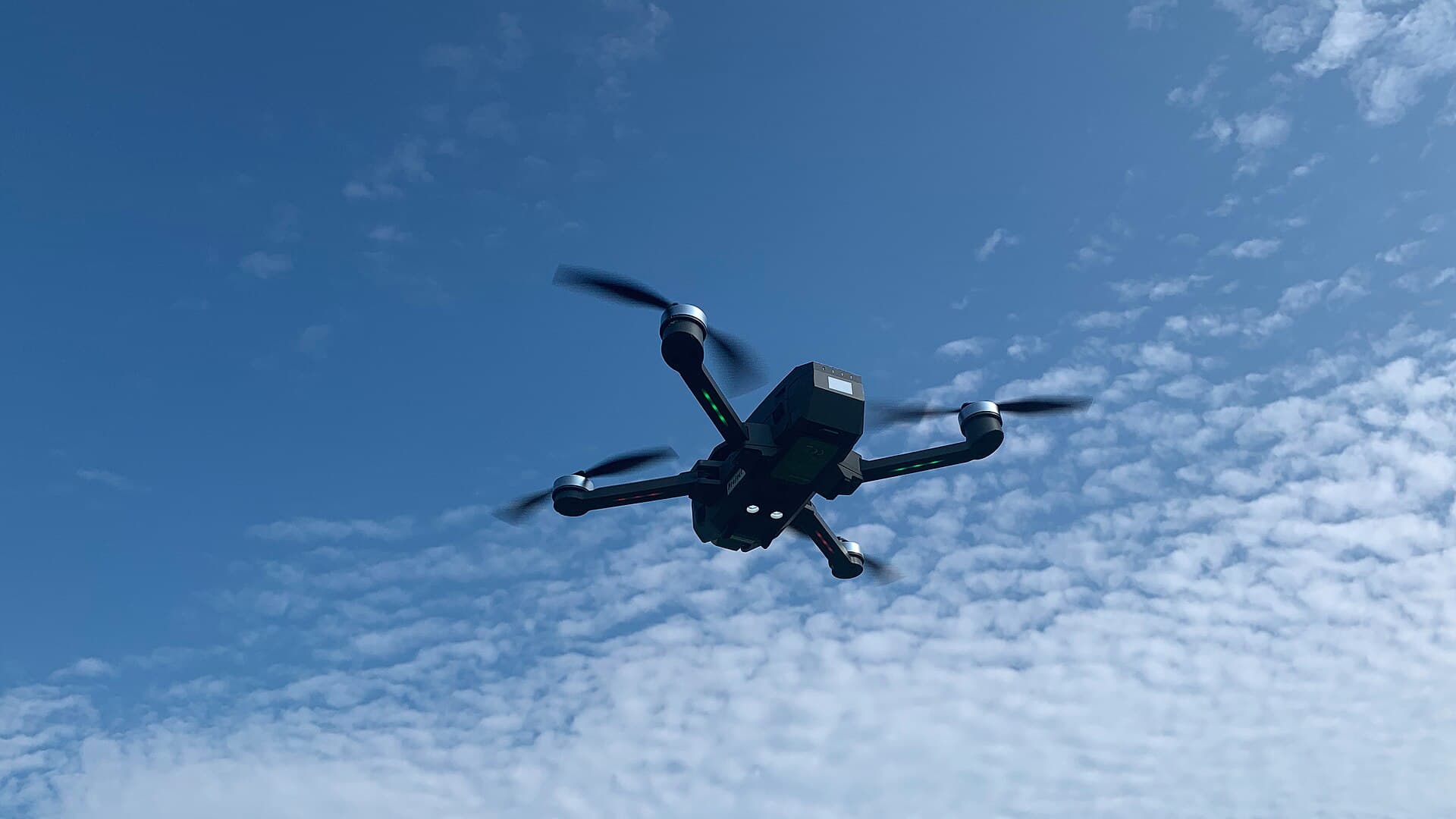
Shortly before midnight local time on August 4, 2026 (21:45 UTC), an airport worker at Leipzig/Halle Airport spotted a drone carrying an explosive device on the southern runway, next to four aircraft belonging to Ukraine's Antonov Airlines. German federal police (Bundespolizei) specialists were called in and defused the device, later confirmed by dpa to be packed with Semtex - the plastic explosive used in the 1988 Lockerbie bombing - in a standard commercial metal tin with the detonator mounted at its base. Unnamed security sources told dpa the worker kicked the drone out of the air and brought it to the ground himself - a specific detail German police have not confirmed on the record. German Interior Minister Alexander Dobrindt told reporters the following day that "a drone armed with explosives at an airport is a new threat scenario," and that investigators believed the device had been "professionally planned and executed," not the work of amateurs.
AirVeto's wind-model data for the event window: At 22:00 UTC on 4 August, close to the sighting, the 500 m layer over Leipzig/Halle Airport showed light ESE wind at 9 km/h.
The airport diverted flights and closed a runway for hours
Police said the sighting prompted the diversion of multiple aircraft to other airports; one was a passenger flight from Mallorca. The southern runway, where cargo operations run, was examined by federal police through the night; the northern runway reopened for regular traffic in the early hours of 5 August. A joint report by Süddeutsche Zeitung, NDR and WDR, cited by CNN, said one of the Antonov aircraft near the drone had carried military ammunition from France to Germany and was awaiting onward transport when the device was found. That claim did not hold: government coalition sources and Mitteldeutsche Flughafen AG's head of communications, Maret Montavon, told dpa and the Leipziger Volkszeitung that the Antonov aircraft involved were empty at the time and carried no cargo at all. The drone had sat undetected beside the Antonov aircraft for roughly four hours before it was found, and investigators believe only a technical malfunction prevented the device from detonating.
Leipzig/Halle Airport, one of Europe's largest cargo hubs, has hosted Ukraine's Antonov Airlines fleet since Russia's full-scale war on Ukraine began in 2022 and destroyed the carrier's home base at Hostomel. Video from the scene showed the bomb-disposal robot working near an Antonov aircraft painted with the words "Be Brave Like Kherson."
A second object struck a DHL freighter during the closure
While the southern runway was closed, a DHL cargo aircraft aborted its landing and collided in the air with a second, unidentified flying object roughly six kilometers from the airport. The impact left minor nose damage. The DHL jet diverted and landed safely at Hannover Airport, where the damage was found on inspection. Saxony's regional interior minister, Armin Schuster, said investigators were searching for wreckage from the object, which could have been a second drone; authorities have not said whether it was connected to the device found near the runway.
Prosecutors in Saxony who handle politically motivated and extremist crimes initially led the investigation. No suspects have been identified, and Dobrindt said the operation "may also include foreign powers," without naming Russia directly.
Germany treated it as a national security matter, not routine crime
Germany's Federal Prosecutor's Office - which normally handles terrorism and espionage cases - took over the investigation from Saxony state prosecutors on 6 August. It cited the case's significance. Germany's National Security Council, chaired by Chancellor Friedrich Merz, met by phone the next day; Merz stayed in "continuous exchange" with Dobrindt over the incident, dpa reported. A roughly 100-officer unit searched the northern runway again on foot the same day, without disclosing what they were looking for.
The incident joins a run of German airport drone disruptions
The Leipzig/Halle find is the latest in a series of drone incidents at German airports over the past two years. Munich Airport closed for two consecutive days in October 2025 over drone sightings, after which authorities installed a laser system to track incursions. Berlin Brandenburg Airport suspended flights for around two hours in November 2025 after a drone entered its airspace. In July 2024, a parcel caught fire on the ground at Leipzig/Halle before it could be loaded onto a DHL plane, a suspected Moscow-linked sabotage attempt German security services investigated at the time. Germany's air navigation service, DFS, logged 144 drone overflights of restricted airspace in 2025, with 35 of them clustered around Frankfurt Airport alone.
This reconstruction is based on reporting by CNN, dpa (via Yahoo News) and Tagesspiegel, and on AirVeto's wind-model data for the event window.
Update - August 11, 2026: DNA links the drone to a 2024 firebombing
Al Jazeera reported that DNA traces recovered from the device tie it to a firebomb mailed to Leipzig/Halle Airport in July 2024, which had set a cargo container on fire - the earlier "suspected Moscow-linked sabotage attempt" this page already notes (§ The incident joins a run of German airport drone disruptions), now linked forensically rather than by pattern alone. Military analysts and drone-warfare experts told Al Jazeera they assess the drone as Russian in origin, part of a wider campaign of drone incidents across a dozen NATO states and Ireland since 2024 intended to unnerve governments and probe air-defence response times.
Al Jazeera's account adds a step ahead of the sequence already reconstructed above, rather than contradicting it: it reports the drone flew past the airport's air-defence installations undetected and struck the Ukrainian cargo plane directly before failing to detonate and falling to the tarmac, where it went undiscovered for roughly four hours until a bus driver stepped on it and called security - consistent with the discovery timeline already on this page, with a prior strike-and-fall event added at the front of it. AirVeto has not found German-source confirmation of the direct strike on the aircraft; both accounts agree the detonator failed.
Update - September 1, 2026: Germany officially blames Russia, closes a consulate
Germany's government formally blamed Russia for the Leipzig/Halle drone plot on September 1, 2026, moving from the "may also include foreign powers" language cited above to a direct state attribution. Interior Minister Alexander Dobrindt said investigators found drone components, explosives and a detonator matching "other Russian hybrid operations," pointing to "a high degree of technical expertise" in planning but "low-level" agents in execution; he told reporters intelligence showed "people being involved who acted on behalf of Russian state entities" and that "the police investigations, the pattern and intelligence findings prove a Russian responsibility for the attempted attack at Leipzig airport," per NBC News and ms.now (AP).
Foreign Minister Johann Wadephul said the Russian consulate in Bonn will close effective September 18, 2026 and the contract running the Russian House cultural center in Berlin will be rescinded; Germany will also push for more Russian names on EU sanctions lists, tighter entry controls, and added pressure on the sanctioned tanker "shadow fleet." Russia's Foreign Ministry spokesperson Maria Zakharova called the accusation a "far-fetched and contrived pretext," per Tass; Wadephul told ARD television Germany "can at any time show a stronger reaction" but judged it unnecessary for now.
NBC News, citing AP's running tally, put the count at roughly 200 sabotage and malign-activity incidents blamed on Russia across Europe since Russia's full-scale war on Ukraine began in 2022. Hours before the German announcement, Polish Prime Minister Donald Tusk said Poland had been hit by new sabotage, including arson, in the preceding "dozens of hours" - a reference to the fire AirVeto separately reconstructed at WB Electronics' Skarżysko-Kamienna plant, which Polish prosecutors are investigating for possible foreign-intelligence involvement.
Wind conditions over Leipzig/Halle Airport on 4 August
At 22:00 UTC on 4 August, close to the sighting, the 500 m layer over Leipzig/Halle Airport showed light ESE wind at 9 km/h. At 2,000 m the wind backed to WSW at 27.4 km/h; at 3,000 m WSW at 41.8 km/h, notably stronger aloft than at the surface. How AirVeto builds this field, and where it is reliable, is described on the methodology page.
Germany's drone problem is no longer confined to the eastern flank AirVeto tracks by default; Leipzig/Halle sits roughly 900 km west of the Suwałki Gap. Whether that reflects a widening campaign or simply better detection at Western European hubs is a question the next incident in this series will help answer.
Sources
- CNN - Germany warns of 'new threat' after explosives-packed drone targets airport (6 Aug 2026)
- dpa via Yahoo News - Semtex used in Leipzig airport drone bomb, investigators confirm (6 Aug 2026)
- Tagesspiegel - Doch keine Munition in der Antonow: Mitarbeiter holte Drohne mit Fußtritt aus der Luft (6 Aug 2026)
- Al Jazeera - 'New level of danger': Drone incidents scare Europe amid Russia-Ukraine war (11 Aug 2026)
- NBC News - Germany blames Russia for airport drone plot, shuts down consulate (1 Sep 2026)
- ms.now (AP) - Germany blames Russia for attempted drone attack at airport (1 Sep 2026)
- Methodology
Last updated: