
Baltic Sea, 14 Jul 2026 - Polish F-16s intercept Russian Il-20
Polish F-16s intercepted a Russian Il-20 reconnaissance aircraft 30 km north of Ustka in the Baltic Sea on July 14, 2026; Polish Defence Minister Kosiniak-Kamysz called it a large-scale provocation.
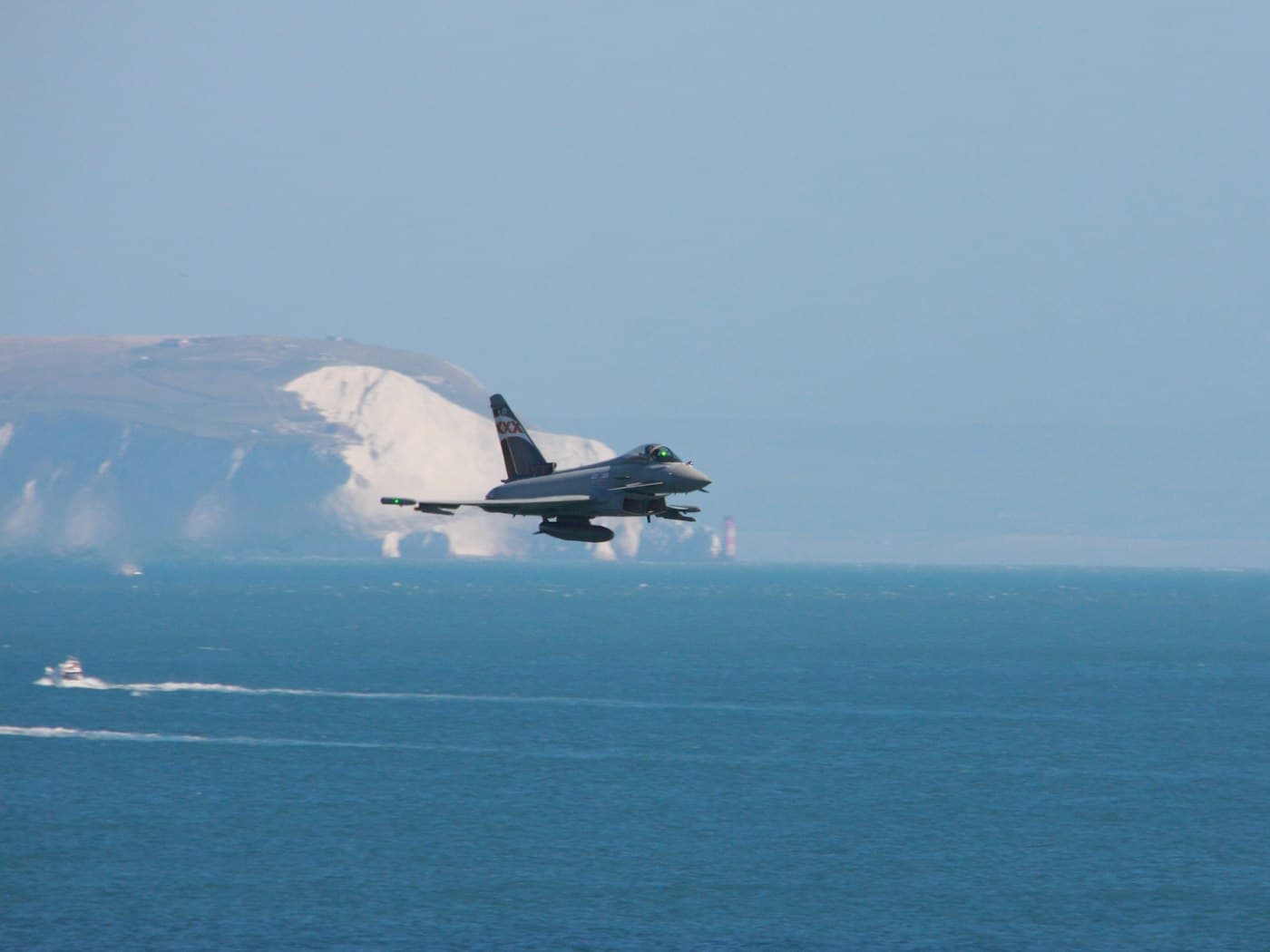
According to Poland's Ministry of National Defence and reporting by UNITED24 Media, TVP World, and the Kyiv Independent, on July 14, 2026 two Polish Air Force F-16 fighters intercepted a Russian Ilyushin Il-20 electronic intelligence (ELINT) aircraft flying approximately 30 km north of Ustka in international airspace over the Baltic Sea. The Russian aircraft was operating without a filed flight plan and with its transponder switched off. After Polish pilots established contact, the Il-20 turned back toward Russia. AirVeto's wind layer covers the Baltic Sea during the 14 July event window.
The Il-20 was gathering intelligence on Polish air-defence systems
The Russian Ilyushin Il-20 (NATO reporting name: Coot-A) is Russia's primary ELINT platform for the western theatre. It operates by flying parallel to NATO coastlines at high altitude, collecting radar emission signatures, radio traffic, and electronic intelligence from NATO air-defence systems that activate in response to its presence. A Polish scramble in reply is itself the collection event: the moment Polish F-16s launch and their radar systems go active, the Il-20's side-facing antennae are recording the signatures.
The 14 July aircraft flew without a filed flight plan and with its ADS-B transponder switched off, both standard practice for Russian military reconnaissance missions over the Baltic. Poland's Ministry of National Defence confirmed the aircraft did not enter Polish territorial airspace; the intercept took place in international airspace approximately 30 km north of the Ustka coastline.
The July 2026 approach is the 10th documented intercept this year
Polish Defence Minister Władysław Kosiniak-Kamysz described the Il-20's approach as "the first Russian attempt in quite some time to approach our maritime border in order to gather intelligence on our air defense systems." Poland's Ministry of National Defence characterised the mission as "a large-scale provocation" and stated it was designed to "test NATO's readiness."
Reporting by the Washington Times and TVP World places this as the 10th intercept of a Russian military aircraft documented by Polish and NATO forces in 2026. The prior intercept on this Baltic approach was on December 25, 2025, when an IL-20M overflight on Christmas Day coincided with Belarusian smuggling balloons crossing Podlaskie, a combination Polish security analysts characterised as a coordinated hybrid probe.
The December 2025 IL-20M mission used the same aircraft type and the same dark-flight profile
The December 25, 2025 IL-20M intercept is the direct predecessor on the same Baltic approach. In that case the IL-20M flew overnight on Christmas Day while simultaneous Belarusian balloons crossed Podlaskie, placing maximum demand on Polish radar and civil-defence resources simultaneously. The July 14, 2026 mission is simpler in structure (a single aircraft, no recorded simultaneous ground-level activity) but uses the same platform, the same operating procedures, and the same collection objective: mapping Poland's air-defence response signature.
The December mission exploited a holiday-night staffing trough. The July mission flew in mid-afternoon local time, outside that obvious window, which points toward the radar emission pattern itself as the collection target rather than a test of reaction speed.
This reconstruction draws on reporting by Poland's Ministry of National Defence, UNITED24 Media, TVP World, the Kyiv Independent, and the Washington Times, and on AirVeto's wind-model data for the July 14, 2026 event window. The wind layer shows atmospheric conditions over the southern Baltic Sea for the event window. Methodology: methodology.
The Kaliningrad AN-30 identification, June 20, 2026 - in which NATO fighters escorted a three-aircraft Russian reconnaissance formation transiting from Kaliningrad - used the same no-transponder, no-flight-plan operating profile as the 14 July Il-20 approach.
The full archive of military airspace incidents and intercepts over Polish territory is at Dron nad Polską.
Sources
- Polish Ministry of National Defence - Deputy Prime Minister W. Kosiniak-Kamysz: This is a large-scale provocation (14 Jul 2026)
- UNITED24 Media - Polish Fighter Jets Intercept Russian Spy Plane Over Baltic Sea (14 Jul 2026)
- TVP World - Poland intercepts Russian reconnaissance aircraft over Baltic Sea (14 Jul 2026)
- Kyiv Independent - Poland scrambles jets to intercept Russian spy plane in Baltic Sea 'provocation' (14 Jul 2026)
- Washington Times - Poland intercepts Russian surveillance aircraft over Baltic Sea (14 Jul 2026)
- Methodology